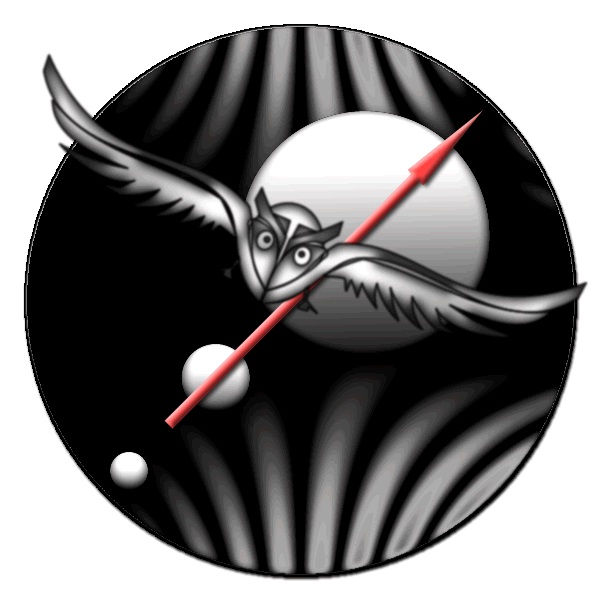
- Remarkable patterns surrounding spinking reveal creative design possibilities
- The Foundations of Spinking: Color and Contrast
- The Role of Value in Creating Depth
- Texture and Form in Visual Rotation
- Building Momentum: Line and Shape
- Applications Beyond Visual Arts: Digital Design and Animation
- Spinking in Branding and Logo Design
- The Psychological Impact of Circular Motion
- Exploring Novel Applications: Interactive Installations and Beyond
Remarkable patterns surrounding spinking reveal creative design possibilities
The world of design is constantly evolving, with new techniques and approaches emerging to push creative boundaries. One such technique, gaining increasing attention among artists and designers, is spinking. This process, often subtle yet profoundly impactful, involves the manipulation of visual elements to create a sense of movement, depth, and an almost ethereal quality. It’s a method that transcends specific mediums, finding application in everything from digital art and illustration to traditional painting and sculpting.
At its core, spinking relies on the skillful blending of colors, textures, and forms to suggest a swirling or spinning motion. It isn't simply about depicting something that is spinning; rather, it’s about imbuing the artwork with a feeling of dynamic energy – a visual echo of rotation. The effect can be subtle, adding a hint of life to a still image, or dramatic, drawing the viewer's eye into a mesmerizing vortex. This technique requires a nuanced understanding of visual perception and a careful consideration of how elements interact to create the desired illusion.
The Foundations of Spinking: Color and Contrast
The effective implementation of spinking relies heavily on a potent understanding of color theory and the strategic use of contrast. Colors aren't simply applied; they are orchestrated to guide the eye and convey the sensation of movement. Similar to how a painter utilizes light and shadow to create form, a practitioner of this technique utilizes color gradients and shifts to suggest a rotational flow. Warm colors, often associated with energy and vibrancy, tend to advance visually, while cooler colors recede. A skillful application of this principle can create a dynamic pull, drawing the viewer’s gaze along a perceived circular path. Furthermore, the juxtaposition of complementary colors – those opposite each other on the color wheel – enhances the sense of visual tension and contributes to the overall feeling of energetic swirl. Careful consideration must be given to the color palette, ensuring that it not only complements the subject matter but also actively participates in communicating the desired sensation of movement.
The Role of Value in Creating Depth
Beyond the specific hues chosen, the value of colors – their lightness or darkness – is equally critical in building the illusion of depth within a spinking composition. A gradual transition from lighter to darker shades, or vice versa, along a curved path can powerfully suggest a swirling form. It’s not enough to simply have a range of values; they must be distributed in a way that reinforces the circular motion. For example, highlighting areas along the perceived edge of a swirl can make them appear closer, while darkening areas within the center can create a sense of receding space. This careful manipulation of value is fundamental to convincing the viewer that they are witnessing a dynamic, three-dimensional form, even on a two-dimensional surface. The key is creating a visual hierarchy that guides the eye seamlessly around the composition.
| Color Combination | Effect |
|---|---|
| Warm Colors (Red, Orange, Yellow) | Creates a sense of energy, vibrancy, and forward motion. |
| Cool Colors (Blue, Green, Purple) | Suggests calmness, depth, and a receding effect. |
| Complementary Colors (e.g., Red & Green) | Enhances visual tension and provides contrast, creating a dynamic feel. |
| Gradual Value Shifts | Creates the illusion of depth and form, particularly effective in depicting swirling shapes. |
The table above illustrates some basic color combinations and their typical effects which can be utilized to enhance the feeling of spinking. By understanding these relationships, artists can more consciously create a piece that emotes the desired sensation.
Texture and Form in Visual Rotation
While color lays the foundation, texture and form are essential for bringing the illusion of spinking to life. The type of texture employed—whether smooth, rough, granular, or flowing—significantly impacts the overall effect. Textures that mimic natural patterns, such as water ripples or wind-blown sand, lend themselves particularly well to this technique. This is because these textures inherently suggest movement and dynamism. Similarly, the way forms are arranged and interconnected plays a crucial role. Soft, blurring edges can contribute to a sense of fluidity and motion, while sharp, defined edges can create a more jarring and energetic effect. The direction of brushstrokes, the arrangement of lines, and the overall composition all contribute to the perceived rotational energy. The careful interplay between texture and form can transform a static image into a captivating visual experience.
Building Momentum: Line and Shape
The intentional use of line and shape can deepen the illusion of spinking and further amplify the perceived motion. Curvilinear shapes, such as spirals and arcs, naturally lend themselves to conveying the idea of rotation. Repeating patterns of lines or shapes can create a sense of rhythm and momentum, guiding the viewer’s eye along a circular path. The thickness and direction of lines can also contribute to the effect. Thicker lines tend to anchor the composition, while thinner, flowing lines suggest movement and lightness. Moreover, incorporating negative space strategically can enhance the illusion of depth and dynamism. Essentially, the artist is choreographing the elements within the frame to generate a visual current which embodies the central theme of spinning or whirling.
- Utilize curvilinear shapes to suggest rotational movement.
- Employ repeating patterns to create rhythm and momentum.
- Vary line thickness to emphasize certain elements and guide the eye.
- Strategically incorporate negative space to enhance depth and dynamism.
- Experiment with blurring techniques to soften edges and create a sense of fluidity.
These elements, when combined thoughtfully, create a synergistic effect that significantly enhances the visual impact of spinking. The success lies in the seamless integration of these techniques, creating a cohesive and believable illusion of movement.
Applications Beyond Visual Arts: Digital Design and Animation
The principles of spinking extend far beyond traditional artistic mediums. In digital design, particularly in user interface (UI) and user experience (UX) design, nuanced application can significantly enhance the user experience. Subtle animations that incorporate swirling or rotating elements can draw attention to important information, guide the user's eye through a layout, or simply add a touch of visual polish. For instance, a loading indicator that utilizes a gentle swirling motion can feel more engaging and less frustrating than a static progress bar. This technique is also finding increasing application in motion graphics and animation, where it can be used to create mesmerizing visual effects. Digital tools offer artists unprecedented control over color, texture, and form, allowing them to push the boundaries of this technique and create truly stunning visual spectacles.
Spinking in Branding and Logo Design
The use of spinking isn’t limited to purely aesthetic applications; it can also be a powerful tool in branding and logo design. A swirling element within a logo can convey a sense of dynamism, innovation, and forward momentum. This is particularly effective for companies that want to project an image of energy and progress. However, it's crucial to use this technique judiciously. An overly complex or distracting design can undermine the brand’s message. The key is to find a balance between visual impact and clarity. A well-executed spinking effect can elevate a logo from being merely recognizable to being truly memorable and evocative.
- Consider the brand's personality and values when incorporating spinking.
- Use subtle animations to enhance engagement without overwhelming the user.
- Ensure the design is scalable and adaptable to different media.
- Test the design thoroughly to ensure it communicates the intended message effectively.
- Maintain a balance between visual impact and clarity to avoid distractions.
Successfully integrating these tips can lead to more impactful and aesthetically pleasing designs.
The Psychological Impact of Circular Motion
The appeal of spinking isn’t solely based on aesthetic considerations; it also taps into fundamental psychological principles. Humans are naturally drawn to circular motion, perhaps due to its prevalence in the natural world – from the swirling of galaxies to the gentle currents of water. This inherent attraction likely contributes to the sense of fascination and intrigue that spinking evokes. Circular patterns are often associated with harmony, wholeness, and cyclical processes, which can create a sense of calm and equilibrium. However, depending on the speed and intensity of the motion, spinking can also evoke feelings of excitement, energy, or even disorientation. Understanding these psychological effects can allow artists and designers to use this technique more effectively to elicit specific emotional responses from their audience.
The use of dynamic forms explores the connection between visual stimuli and human perception, offering a unique avenue for artistic expression and communication. The innate human response to these patterns is a testament to the power of visual language and its ability to influence our emotions and thoughts.
Exploring Novel Applications: Interactive Installations and Beyond
The future of spinking holds exciting possibilities, particularly in the realm of interactive installations and immersive experiences. Imagine a gallery space where the artwork responds to the viewer’s movements, creating a dynamic swirling effect that evolves in real-time. Or a virtual reality environment where users can manipulate the flow of swirling particles, creating their own personalized visual symphonies. Technological advancements are enabling artists to explore these possibilities and push the boundaries of what’s achievable. The convergence of art, technology, and psychology promises to unlock new and innovative ways for this technique to captivate and inspire audiences. The key is to think beyond the traditional canvas and embrace the potential of emerging mediums to harness the power of motion and visual perception.
These interactive installations can encourage user engagement as they explore and create their own visual responses, leading to a more personal and immersive experience. As technology continues to evolve, we can expect to see even more innovative applications of spinking in various fields, solidifying its place as a powerful and versatile design tool.
No responses yet